Hermann Beims Housing estate (Hermann-Beims-Siedlung) (1925)

Feed image of Hermann Beims Housing estate

#Housing estate #Magdeburg #Germany #1925

Architects

Bruno Taut, Johannes Göderitz, Konrad Rühl, Gerhard Gauger, Willy Zabel

Developers

GEHAG Gemeinnützige Heimstätten-, Spar- und Bau-Aktiengesellschaft AG , Verein für Kleinwohnungswesen

Address and directions

Beimsstraße; Calvörder Straße; Flechtinger Straße; Große Diesdorfer Straße; Harbker Straße; Haverlaher Straße; Hohendodeleber Straße; Hötensleber Straße; Marienborner Straße; Offleber Straße; Seehäuser Straße; Völpker Straße; Walbecker Straße
39110 Magdeburg, Germany

Public transport: Flechtinger Straße

Access: After appointment

Today's use: Apartments and shops
Magdeburg’s First Modern Movement Housing Estate
Description

In the space of seven years, just over 2,000 flats were completed within the estate, although around 5,000 had originally been planned. The flats average around 63 square metres in size and typically contain three rooms.

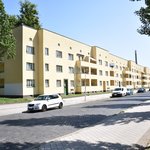
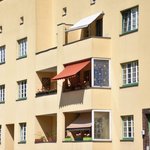
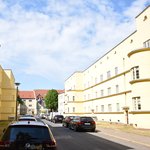
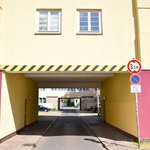
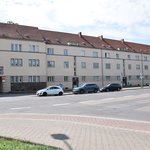
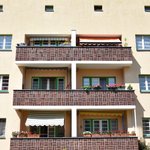
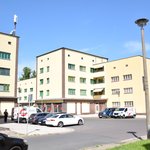
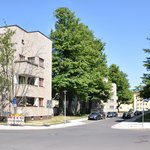
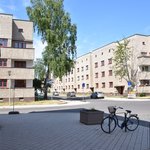
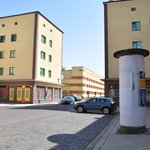
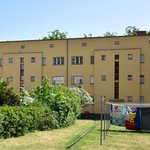
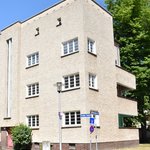
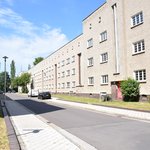
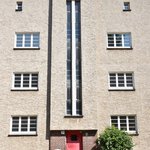
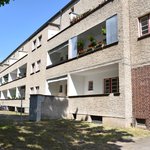
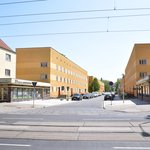
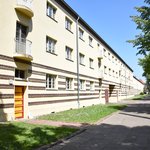
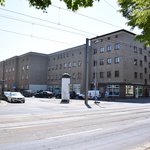
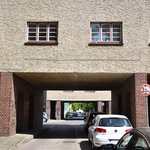
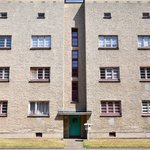
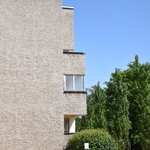
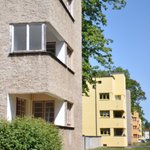
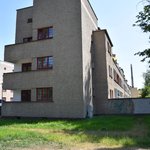
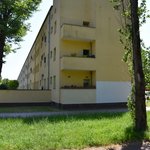
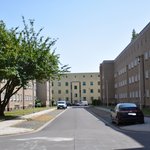
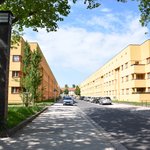
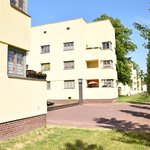
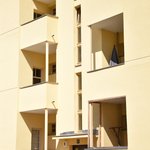
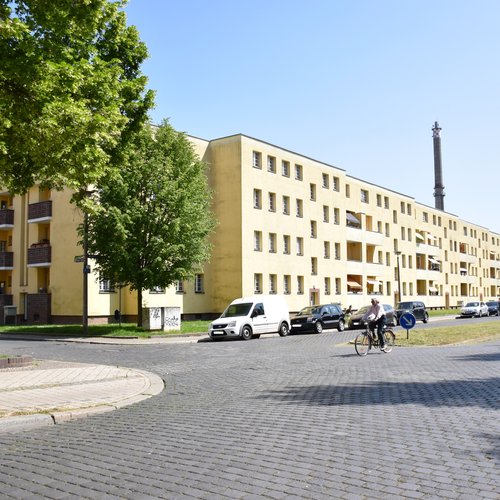
The streets of the estate are lined with three- and four-storey buildings with flat roofs, reflecting the principles of Neues Bauen architecture. However, along the outer edges of the development the houses were built with pitched roofs, seemingly to ensure that the modern flat-roofed architecture would not be too visible from the main road, Große Diesdorfer Straße. Many of the buildings are long and linear in design, while balconies and loggias were incorporated throughout the estate.

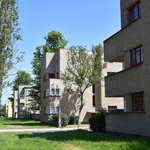
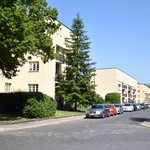
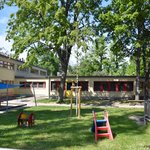
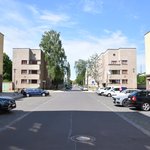
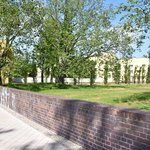
The layout of the estate was carefully planned to reduce through traffic. Several cul-de-sacs were created within the residential areas, enclosed by the surrounding buildings, as can still be seen at the northern ends of Calvörder Straße, Marienborner Straße and Völpkerstraße. The roads in between serve primarily as routes leading out of the estate. Green spaces were integrated throughout the development, and at its centre an east–west axis of poplar trees, walls and pathways forms a small park. The construction of the nursery school in the centre of the estate did not follow the original plans.

At Beimsstraße 8, visitors can view a preserved historic flat that also offers overnight accommodation.

Description

In the space of seven years, just over 2,000 flats were completed within the estate, although around 5,000 had originally been planned. The flats average around 63 square metres in size and typically contain three rooms.

The streets of the estate are lined with three- and four-storey buildings with flat roofs, reflecting the principles of Neues Bauen architecture. However, along the outer edges of the development the houses were built with pitched roofs, seemingly to ensure that the modern flat-roofed architecture would not be too visible from the main road, Große Diesdorfer Straße. Many of the buildings are long and linear in design, while balconies and loggias were incorporated throughout the estate.

The layout of the estate was carefully planned to reduce through traffic. Several cul-de-sacs were created within the residential areas, enclosed by the surrounding buildings, as can still be seen at the northern ends of Calvörder Straße, Marienborner Straße and Völpkerstraße. The roads in between serve primarily as routes leading out of the estate. Green spaces were integrated throughout the development, and at its centre an east–west axis of poplar trees, walls and pathways forms a small park. The construction of the nursery school in the centre of the estate did not follow the original plans.

At Beimsstraße 8, visitors can view a preserved historic flat that also offers overnight accommodation.

History

The housing estate was built between 1925 and 1932 in order to address the severe housing shortage in Magdeburg. Around 2,000 flats were constructed, although in the end only about one third of the originally planned development was completed. 

In Magdeburg, GEHOG operated under the name Magdeburger Gemeinnützige Heimstätten AG (“Magdeburg Non-Profit Housing Association Ltd.”). This demonstrates the influence of Bruno Taut. Johannes Göderitz was responsible for overseeing the city’s building projects.

One of the estate’s first residents was the architect Konrad Rühl, who lived in a flat at Calvörder Straße 1. The visual documentation of the project is remarkable, as the Magdeburg City Archives has made many of the photographs available online.

Since 1931, the estate has been named after Hermann Beims, the mayor of Magdeburg, who died in the same year.

Beginning in the 1990s, the buildings have been modernised in several phases.

History

The housing estate was built between 1925 and 1932 in order to address the severe housing shortage in Magdeburg. Around 2,000 flats were constructed, although in the end only about one third of the originally planned development was completed. 

In Magdeburg, GEHOG operated under the name Magdeburger Gemeinnützige Heimstätten AG (“Magdeburg Non-Profit Housing Association Ltd.”). This demonstrates the influence of Bruno Taut. Johannes Göderitz was responsible for overseeing the city’s building projects.

One of the estate’s first residents was the architect Konrad Rühl, who lived in a flat at Calvörder Straße 1. The visual documentation of the project is remarkable, as the Magdeburg City Archives has made many of the photographs available online.

Since 1931, the estate has been named after Hermann Beims, the mayor of Magdeburg, who died in the same year.

Beginning in the 1990s, the buildings have been modernised in several phases.

Sources

Construction types
masoned
Facades
clinker brick plaster
Windows
casement fixed
Roof
flat gable
Details
balcony
Position
along a street with/in a garden/park periphere/neighbourhood
Storeys
4

Impressions

Gallery image of Hermann Beims Housing estate Gallery image of Hermann Beims Housing estate Gallery image of Hermann Beims Housing estate Gallery image of Hermann Beims Housing estate Gallery image of Hermann Beims Housing estate Gallery image of Hermann Beims Housing estate Gallery image of Hermann Beims Housing estate Gallery image of Hermann Beims Housing estate Gallery image of Hermann Beims Housing estate Gallery image of Hermann Beims Housing estate Gallery image of Hermann Beims Housing estate Gallery image of Hermann Beims Housing estate Gallery image of Hermann Beims Housing estate Gallery image of Hermann Beims Housing estate Gallery image of Hermann Beims Housing estate Gallery image of Hermann Beims Housing estate Gallery image of Hermann Beims Housing estate Gallery image of Hermann Beims Housing estate Gallery image of Hermann Beims Housing estate Gallery image of Hermann Beims Housing estate Gallery image of Hermann Beims Housing estate Gallery image of Hermann Beims Housing estate Gallery image of Hermann Beims Housing estate Gallery image of Hermann Beims Housing estate Gallery image of Hermann Beims Housing estate Gallery image of Hermann Beims Housing estate Gallery image of Hermann Beims Housing estate Gallery image of Hermann Beims Housing estate Gallery image of Hermann Beims Housing estate Gallery image of Hermann Beims Housing estate Gallery image of Hermann Beims Housing estate Gallery image of Hermann Beims Housing estate Gallery image of Hermann Beims Housing estate Gallery image of Hermann Beims Housing estate Gallery image of Hermann Beims Housing estate Gallery image of Hermann Beims Housing estate Gallery image of Hermann Beims Housing estate Gallery image of Hermann Beims Housing estate Gallery image of Hermann Beims Housing estate Gallery image of Hermann Beims Housing estate Gallery image of Hermann Beims Housing estate Gallery image of Hermann Beims Housing estate Gallery image of Hermann Beims Housing estate Gallery image of Hermann Beims Housing estate Gallery image of Hermann Beims Housing estate Gallery image of Hermann Beims Housing estate Gallery image of Hermann Beims Housing estate Gallery image of Hermann Beims Housing estate Gallery image of Hermann Beims Housing estate