Architect Liska's Gardens (Sady architekta Lisky) (1932)

Feed image of Architect Liska's Gardens

#Housing estate #Hradec Králové #Czechia #1932

Architects

Heinrich (Jindřich) Kulka, Oldřich Liska, František Komárek, Josef Novák, Bedřich Novotný, Robert Schmidt

Address and directions

Ambrožova 906/2; Mánesova 925/19, 902/21, 910/23, 909/28, 895/30; Nerudova 934/1, 915/3, 908/5, 940/7, 615/9, 884/11, 923/13; Střelecká 907/43, 861/45, 824/47, 832/49, 863/51, 880/63; V Lipkách 893/2, 903/4, 915/4a, 894/6, 866/8, 865/10, 869/12
500 02 Hradec Králové, Czechia

Public transport: Lipky

Today's use: Apartments and pub
Description

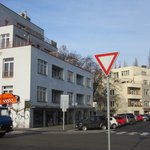
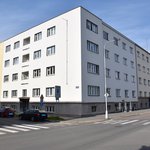
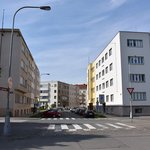
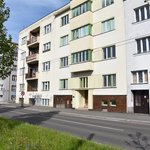
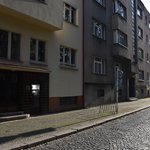
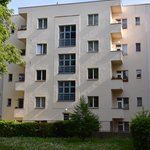
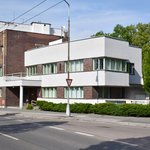
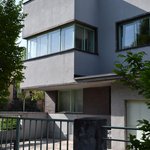
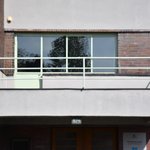
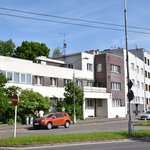
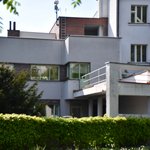
The scheme comprises two blocks containing a total of 26 houses, two of which were built as villas. The villa in the north of the architect Oldřich Liska for himself has a little pool, that is currently filled with soil. The southern villa by the same architect belonged to Alois Švorčík. The whole small estate forms a triangular extension of the Community of Priest Ambrož to the east, with the houses aligned along the surrounding streets.

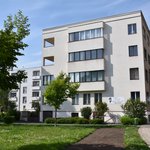
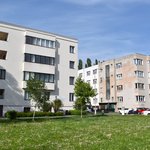
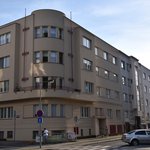
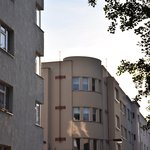
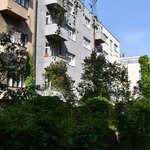
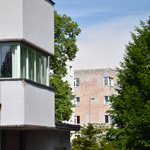
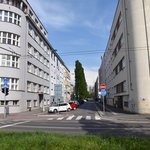
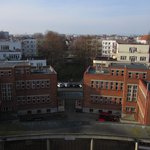
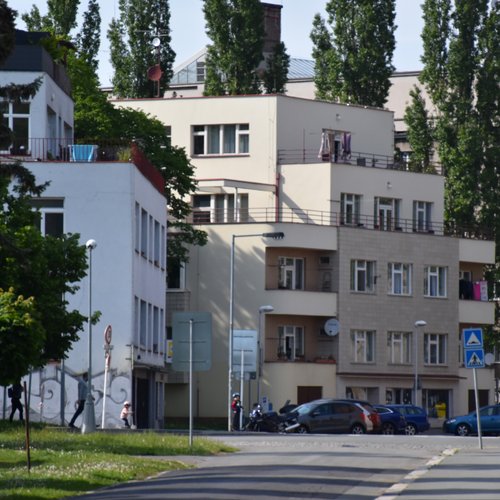
The blocks were deliberately opened up, allowing access to the courtyards and the small park within, so that these spaces could be used for walking and recreation. From both the eastern and western sides, the façades rise in a stepped form towards the corner sections, creating a sense of architectural openness and function like an entrance.

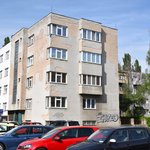
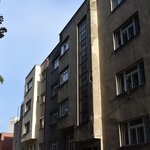
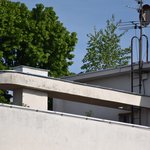
Each building was designed individually on its outward-facing side, as the developers were able to determine the appearance of their respective investments. Despite this variety, all the houses share a common construction method: reinforced concrete frames with brick infill. Many of the flats also included quarters for domestic staff, indicating that the residents were relatively affluent.

Description

The scheme comprises two blocks containing a total of 26 houses, two of which were built as villas. The villa in the north of the architect Oldřich Liska for himself has a little pool, that is currently filled with soil. The southern villa by the same architect belonged to Alois Švorčík. The whole small estate forms a triangular extension of the Community of Priest Ambrož to the east, with the houses aligned along the surrounding streets.

The blocks were deliberately opened up, allowing access to the courtyards and the small park within, so that these spaces could be used for walking and recreation. From both the eastern and western sides, the façades rise in a stepped form towards the corner sections, creating a sense of architectural openness and function like an entrance.

Each building was designed individually on its outward-facing side, as the developers were able to determine the appearance of their respective investments. Despite this variety, all the houses share a common construction method: reinforced concrete frames with brick infill. Many of the flats also included quarters for domestic staff, indicating that the residents were relatively affluent.

History

The development was created as part of the urban planning schemes for the entire right bank of the Elbe within the city, which were in force from 1925 under Josef Gočár. Work began with the laying out of the park and the construction and the villa Švorčík designed by the architect Oldřich Liska in 1932.

It is striking that at the moment, that not all houses' architects have been identified. The houses were built up to 1939. In later years, further houses were added to the south-west of the quarter in accordance with the development plan.

History

The development was created as part of the urban planning schemes for the entire right bank of the Elbe within the city, which were in force from 1925 under Josef Gočár. Work began with the laying out of the park and the construction and the villa Švorčík designed by the architect Oldřich Liska in 1932.

It is striking that at the moment, that not all houses' architects have been identified. The houses were built up to 1939. In later years, further houses were added to the south-west of the quarter in accordance with the development plan.

Sources

Construction types
concrete skeleton
Facades
plaster ceramics
Windows
casement ribbon
Roof
flat
Details
balcony flagpole railing roof terrace oriel garage
Position
along a street periphere/neighbourhood
Storeys
5

Impressions

Gallery image of Architect Liska's Gardens Gallery image of Architect Liska's Gardens Gallery image of Architect Liska's Gardens Gallery image of Architect Liska's Gardens Gallery image of Architect Liska's Gardens Gallery image of Architect Liska's Gardens Gallery image of Architect Liska's Gardens Gallery image of Architect Liska's Gardens Gallery image of Architect Liska's Gardens Gallery image of Architect Liska's Gardens Gallery image of Architect Liska's Gardens Gallery image of Architect Liska's Gardens Gallery image of Architect Liska's Gardens Gallery image of Architect Liska's Gardens Gallery image of Architect Liska's Gardens Gallery image of Architect Liska's Gardens Gallery image of Architect Liska's Gardens Gallery image of Architect Liska's Gardens Gallery image of Architect Liska's Gardens Gallery image of Architect Liska's Gardens Gallery image of Architect Liska's Gardens Gallery image of Architect Liska's Gardens Gallery image of Architect Liska's Gardens Gallery image of Architect Liska's Gardens