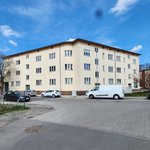
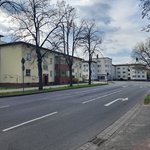
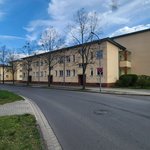
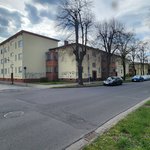
Public housing Estate Volksheim (Volksheimsiedlung) (1928)

Feed image of Public housing Estate Volksheim

#Housing estate #Luckenwalde #Germany #1928

Architects

Willi Ludewig

Developers

Gewerkschaftshaus- und Volksheim GmbH

Address and directions

August-Bebel-Platz 1-14; Dahmer Straße 27, 28; Gottower Straße 1-8; Jänickendorfer Straße 81-89; Karl-Marx-Straße 1-15; Theaterstraße 28, 30; Wilhelm-Liebknecht-Straße 2-12
14943 Luckenwalde, Germany

Public transport: Jänickendorfer Straße

Today's use: Apartments and shops

Luckenwalde's Landmark Housing Estate

Description

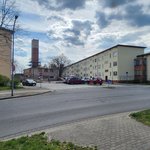
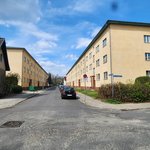
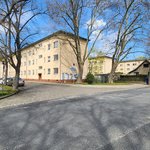
The estate was conceived as a fan-shaped residential development. The housing blocks were arranged around the central August-Bebel-Platz in a series of slightly angled, longitudinal rows, creating a distinctive radial layout.

To the north, the blocks are screened from Gottower Straße by a lower residential wing, which forms a buffer between the street and the inner courtyards, creating quieter communal spaces. Towards Rosa-Luxemburg-Straße to the south, the development opens up, giving the estate a more spacious character.

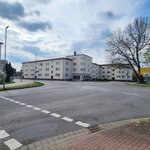
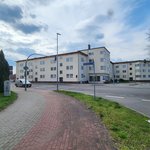
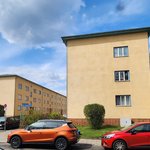
At the western edge of the estate, a separate block follows the alignment of the street. It is architecturally emphasised by a four-storey corner building—the tallest structure within the development—with shops incorporated into the ground floor.

The fan-shaped arrangement gives the central August-Bebel-Platz its distinctive triangular form. This space accommodates the historic boiler house, which originally supplied the entire estate with heat, as well as a children's playground.

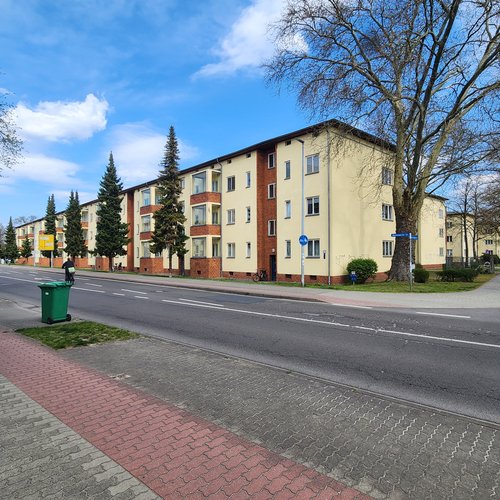
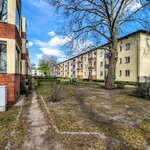
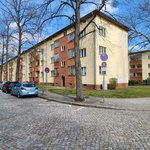
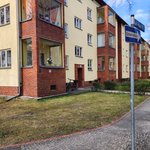
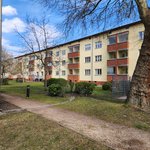
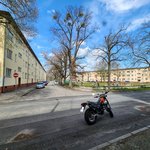
The buildings completed by 1932 originally featured open balconies, which formed an integral part of the architectural design. During the later refurbishment, these balconies were enclosed with slim-profile glazing. The lightweight glazing system was deliberately chosen to preserve the architectural character of the façades while improving the usability of the balconies.

A key objective of the housing association during the most recent renovation was to ensure that every flat in these earlier buildings retained access to a balcony. The interventions remain clearly identifiable through the exposed balcony structures.

By contrast, the two blocks erected in 1936 were originally built without balconies and did not receive any during the refurbishment, thereby preserving the distinction between the original construction phases and the later additions.

Description

The estate was conceived as a fan-shaped residential development. The housing blocks were arranged around the central August-Bebel-Platz in a series of slightly angled, longitudinal rows, creating a distinctive radial layout.

To the north, the blocks are screened from Gottower Straße by a lower residential wing, which forms a buffer between the street and the inner courtyards, creating quieter communal spaces. Towards Rosa-Luxemburg-Straße to the south, the development opens up, giving the estate a more spacious character.

At the western edge of the estate, a separate block follows the alignment of the street. It is architecturally emphasised by a four-storey corner building—the tallest structure within the development—with shops incorporated into the ground floor.

The fan-shaped arrangement gives the central August-Bebel-Platz its distinctive triangular form. This space accommodates the historic boiler house, which originally supplied the entire estate with heat, as well as a children's playground.

The buildings completed by 1932 originally featured open balconies, which formed an integral part of the architectural design. During the later refurbishment, these balconies were enclosed with slim-profile glazing. The lightweight glazing system was deliberately chosen to preserve the architectural character of the façades while improving the usability of the balconies.

A key objective of the housing association during the most recent renovation was to ensure that every flat in these earlier buildings retained access to a balcony. The interventions remain clearly identifiable through the exposed balcony structures.

By contrast, the two blocks erected in 1936 were originally built without balconies and did not receive any during the refurbishment, thereby preserving the distinction between the original construction phases and the later additions.

History

The settlement was modelled on contemporary housing estates in Berlin and, in keeping with common practice at the time, was constructed in several phases.

The first phase comprised the two central U-shaped blocks, bounded by Jänickendorfer Straße, Gottower Straße, Karl-Marx-Straße, August-Bebel-Platz and Rosa-Luxemburg-Straße. Between 1930 and 1931, the western block was completed along Theaterstraße, Jänickendorfer Straße and Dahmestraße, distinguished by its prominent corner buildings. The final phase before the Nazis came to power, carried out between 1931 and 1932, added the eastern residential block bordering August-Bebel-Platz and Gottower Straße.

Despite these ambitious plans, an increasing number of flats remained vacant. As unemployment continued to rise during the economic crisis, rents became unaffordable for many families. This increasingly affected not only working-class households but also lower middle-class families and skilled workers, who had originally formed the settlement's principal tenant base. Following the bankruptcy of the development company, ownership and management of the estate were transferred in early 1933 to the newly established municipal Volksheim-Gesellschaft.

The original scheme was never fully completed. Economic hardship, together with the political changes following the Nazi seizure of power in 1933, brought further development to a halt. In 1936, the municipality constructed two additional blocks along Wilhelm-Liebknecht-Straße, closely following the original design. However, these later buildings are generally regarded as being of lower architectural quality than the earlier phases.

Following German reunification, responsibility for the estate passed to the municipal housing company Die Luckenwalder. Between 2005 and 2008, the entire complex underwent comprehensive restoration and modernisation.

History

The settlement was modelled on contemporary housing estates in Berlin and, in keeping with common practice at the time, was constructed in several phases.

The first phase comprised the two central U-shaped blocks, bounded by Jänickendorfer Straße, Gottower Straße, Karl-Marx-Straße, August-Bebel-Platz and Rosa-Luxemburg-Straße. Between 1930 and 1931, the western block was completed along Theaterstraße, Jänickendorfer Straße and Dahmestraße, distinguished by its prominent corner buildings. The final phase before the Nazis came to power, carried out between 1931 and 1932, added the eastern residential block bordering August-Bebel-Platz and Gottower Straße.

Despite these ambitious plans, an increasing number of flats remained vacant. As unemployment continued to rise during the economic crisis, rents became unaffordable for many families. This increasingly affected not only working-class households but also lower middle-class families and skilled workers, who had originally formed the settlement's principal tenant base. Following the bankruptcy of the development company, ownership and management of the estate were transferred in early 1933 to the newly established municipal Volksheim-Gesellschaft.

The original scheme was never fully completed. Economic hardship, together with the political changes following the Nazi seizure of power in 1933, brought further development to a halt. In 1936, the municipality constructed two additional blocks along Wilhelm-Liebknecht-Straße, closely following the original design. However, these later buildings are generally regarded as being of lower architectural quality than the earlier phases.

Following German reunification, responsibility for the estate passed to the municipal housing company Die Luckenwalder. Between 2005 and 2008, the entire complex underwent comprehensive restoration and modernisation.

Sources

Construction types
masoned
Facades
clinker brick plaster
Windows
casement oculus
Roof
gable
Details
balcony winter garden
Position
along a street periphere/neighbourhood
Storeys
4

Impressions

Gallery image of Public housing Estate Volksheim Gallery image of Public housing Estate Volksheim Gallery image of Public housing Estate Volksheim Gallery image of Public housing Estate Volksheim Gallery image of Public housing Estate Volksheim Gallery image of Public housing Estate Volksheim Gallery image of Public housing Estate Volksheim Gallery image of Public housing Estate Volksheim Gallery image of Public housing Estate Volksheim Gallery image of Public housing Estate Volksheim Gallery image of Public housing Estate Volksheim Gallery image of Public housing Estate Volksheim Gallery image of Public housing Estate Volksheim Gallery image of Public housing Estate Volksheim Gallery image of Public housing Estate Volksheim Gallery image of Public housing Estate Volksheim Gallery image of Public housing Estate Volksheim Gallery image of Public housing Estate Volksheim