Reinhold Mohr was a German architect and municipal building official who played a major role in shaping Potsdam’s architecture during the interwar period. Born in Stuttgart, he joined Potsdam’s municipal building department in 1911 and became one of the city’s leading representatives of modern architecture.
Mohr’s work combined elements of Expressionism with modern architectural principles. He was particularly committed to the use of colour in buildings and public spaces, challenging Potsdam’s predominantly historicist architectural tradition.
Among his most significant projects of the 1920s and early 1930s were the extension of the municipal hospital, the residential development at Am Stadtrand, and several buildings at the former Luftschiffhafen sports complex.
After the Second World War, Mohr contributed to planning the reconstruction of Potsdam’s heavily damaged city centre. He advocated preserving and rebuilding its historic architectural heritage, but became increasingly disappointed by the direction of urban development. He retired in 1955 and returned to his birthplace, Stuttgart, in 1966, where he died in 1978.
Mohr’s legacy illustrates the tension between tradition and modernity in Potsdam’s architectural development, as well as the challenges of preserving historic urban environments during periods of political and social change.
Sources
Buildings
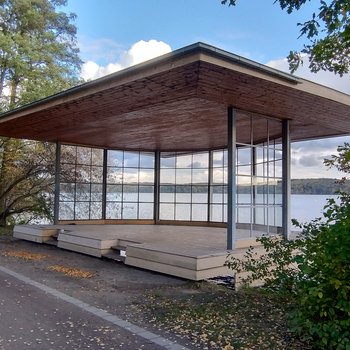
Potsdam, Germany
Airship harbour