Colonnade Bridge (Kolonádový most) (1933)

Feed image of Colonnade Bridge

#Bridge #Piešťany #Slovakia #1933

Architects

Emil Belluš

Developers

Ľudovít Winter

Address and directions

Kolonádový most
921 01 Piešťany, Slovakia

Public transport: Kaplnka

Access: Accessible

Today's use: Bridge

A Charming Blend of Architecture, Art and History

Description

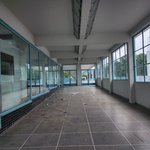
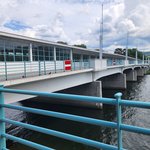
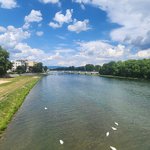
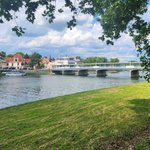
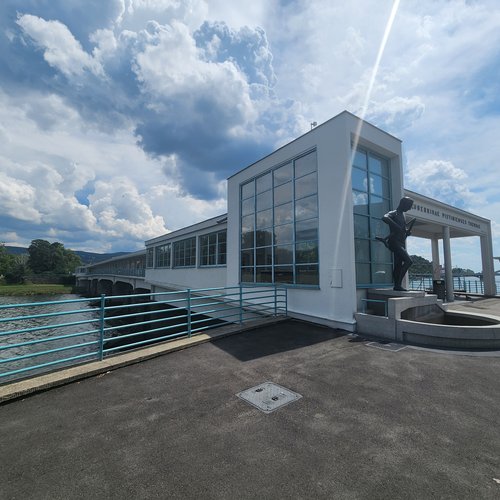
The Colonnade Bridge is a reinforced-concrete structure designed in the functionalist style by Emil Belluš. Its seven spans connect the town centre with Spa Island. The bridge was originally designed to accommodate both vehicles and pedestrians, with a covered promenade providing protection from adverse weather.

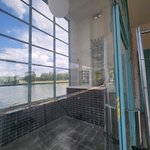
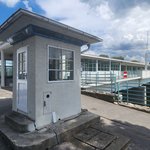
A glazed partition separates the pedestrian promenade from the roadway. The glass artworks Piesne z Detvy (Songs of Detva) and Na salaši (On the Farm), designed by Martin Benka in 1933, form an integral part of this partition. Shops and exhibition spaces were incorporated into the wider sections at the bridge entrances, combining practical functions with the overall architectural design. 

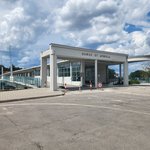
Two Latin inscriptions at the entrances of the bridge refer to the healing properties and the power of water of the spa town.

1. Saluberrimae Pistiniensis Thermae - The Most Healing Thermal Baths of Piešťany

The inscription refers to the healing properties of the town’s thermal springs and its long spa tradition. It is also the title of a Latin poem written by Adam Trajan in 1642, praising the healing waters of Piešťany.

2. Surge et ambula -Rise and Walk

This phrase comes from the Bible, specifically Matthew 9:6, in which Jesus speaks in the context of healing a paralyzed man. On the bridge, the inscription symbolizes the hope that spa treatments can help people regain their health and mobility.

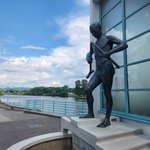
Nowadays, the bridge is open to pedestrians only, and the benches along the road can be used in peace and quiet. The bronze figure seated on a bench depicts the patron, Ľudovít Winter.

At the town-side entrance stands the bronze sculpture Crutch Breaker (Barlolamač), created by Robert Kühmayer, which is closely associated with the identity of the Piešťany spa. Although the planned riverside colonnades on Spa Island were never completed, the bridge remains a distinctive example of modernist architecture, bringing together engineering, public space and artistic decoration.
Description

The Colonnade Bridge is a reinforced-concrete structure designed in the functionalist style by Emil Belluš. Its seven spans connect the town centre with Spa Island. The bridge was originally designed to accommodate both vehicles and pedestrians, with a covered promenade providing protection from adverse weather.

A glazed partition separates the pedestrian promenade from the roadway. The glass artworks Piesne z Detvy (Songs of Detva) and Na salaši (On the Farm), designed by Martin Benka in 1933, form an integral part of this partition. Shops and exhibition spaces were incorporated into the wider sections at the bridge entrances, combining practical functions with the overall architectural design. 

Two Latin inscriptions at the entrances of the bridge refer to the healing properties and the power of water of the spa town.

1. Saluberrimae Pistiniensis Thermae - The Most Healing Thermal Baths of Piešťany

The inscription refers to the healing properties of the town’s thermal springs and its long spa tradition. It is also the title of a Latin poem written by Adam Trajan in 1642, praising the healing waters of Piešťany.

2. Surge et ambula -Rise and Walk

This phrase comes from the Bible, specifically Matthew 9:6, in which Jesus speaks in the context of healing a paralyzed man. On the bridge, the inscription symbolizes the hope that spa treatments can help people regain their health and mobility.

Nowadays, the bridge is open to pedestrians only, and the benches along the road can be used in peace and quiet. The bronze figure seated on a bench depicts the patron, Ľudovít Winter.

At the town-side entrance stands the bronze sculpture Crutch Breaker (Barlolamač), created by Robert Kühmayer, which is closely associated with the identity of the Piešťany spa. Although the planned riverside colonnades on Spa Island were never completed, the bridge remains a distinctive example of modernist architecture, bringing together engineering, public space and artistic decoration.
History

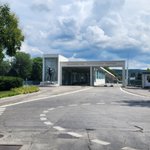
The Colonnade Bridge, also known as the Glass Bridge (Sklený most), is an important landmark in Piešťany. It crosses the River Váh and connects the town centre with Spa Island, home to the town’s principal spa facilities. The bridge was conceived by Ľudovít Winter, who wanted to provide spa visitors with a comfortable, sheltered connection to the town.

Designed by Emil Belluš, the bridge was constructed between 1930 and 1933. Its design combined a pedestrian promenade with a road and integrated shops.

In April 1945, retreating German forces destroyed the bridge’s central sections. The damaged parts were reconstructed according to its original design and reopened in 1956. Today, the bridge is an important example of Slovak functionalist architecture and a significant part of Piešťany’s cultural heritage.

Sources

Construction types
reinforced concrete
Facades
plaster concrete
Windows
fixed
Roof
flat
Details
illumination railing sculpture canopy lettering bench pillar footbridge arcaded sidewalk
Position
along a street centre of a city/town/village

Impressions

Gallery image of Colonnade Bridge Gallery image of Colonnade Bridge Gallery image of Colonnade Bridge Gallery image of Colonnade Bridge Gallery image of Colonnade Bridge Gallery image of Colonnade Bridge Gallery image of Colonnade Bridge Gallery image of Colonnade Bridge Gallery image of Colonnade Bridge Gallery image of Colonnade Bridge