Franjo Bahovec studied architecture in Zagreb from 1925 to 1929, graduating from the Faculty of Technology. Immediately after completing his studies, he spent two months in Berlin, working in the studio of Alfred Gellhorn, an experience that exposed him directly to contemporary European modernism. Throughout these formative years he remained in close intellectual and personal contact with Josip Pičman, a relationship that shaped his thinking about modern architectural practice.
In 1930 he joined the Municipal Building Office in Zagreb, working in the High-Rise Construction Department. By the mid-1930s he had fully embraced modernist principles, producing rational, unadorned buildings defined by functional clarity. With Ivan Zemljak he designed several Zagreb school buildings. Together with Antun Ulrich he created one of his most distinctive works of the decade, the mixed-use building with the Chapel of the Wounded Jesus at Ilica 1A (1934). Late in the 1930s he collaborated with Zvonimir Kavurić on the Police Headquarters in Petrinjska 32 (1939). He is also known for many sports park and small swimming pool at Šalata in Zagreb.
After the Second World War, as part of the extensive reconstruction of war-damaged regions, he contributed regulatory sketches for settlements in Croatian regions like Gorski kotar and Lika. From the mid-1940s onward he steadily oriented his practice toward sports and industrial facilities, being active until the 1970s.
Sources
Buildings
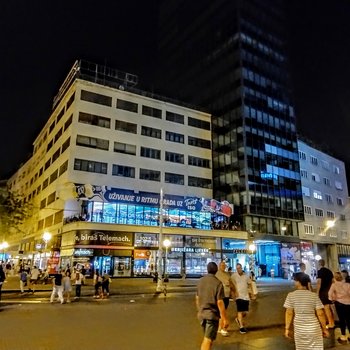
Zagreb, Croatia
Foundation Block