Römerstadt (1927)

Feed image of Römerstadt

#Housing estate #Frankfurt (Main) #Germany #1927

Architects

Martin Elsaesser, Ernst May, Carl-Hermann Rudloff, Karl Blattner, Gustav Schaupp

Developers

Aktienbaugesellschaft für kleine Wohnungen (ABG)

Address and directions

Am Forum; An der Ringmauer; Hadrianstraße; Im Burgfeld; Im Heidenfeld; In der Römerstadt; Mithrastraße
60439 Frankfurt (Main), Germany

Public transport: Römerstadt

Access: Public building, free entry during working hours

Today's use: Apartments, shops, museum

Architecture, Landscape and Museum in the Neues Frankfurt Estate

Description

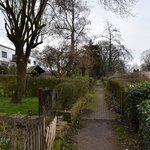
The Römerstadt housing estate is a key example of the Neues Frankfurt programme and is notable for the way its overall layout is shaped by the surrounding landscape. The course of the River Nidda, running from the districts of Praunheim to Heddernheim, determines the site with a gentle, sweeping line. Along the river, the estate is defined by an embankment, beyond which it opens into green spaces with allotment gardens, creating a gradual transition between built form and nature.

Conceived as a classic satellite settlement, Römerstadt was planned as a largely self-contained residential area without a direct structural connection to the existing city. Essential facilities such as schools and local shops were integrated into the estate itself, forming a neighbourhood centre, while more specialised services remained in the city and were accessible by public transport. This reflects the broader urban planning principles of the time, which sought to decentralise the city while maintaining connectivity.

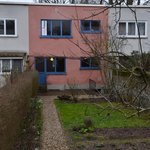
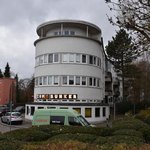
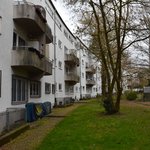
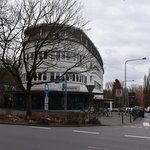
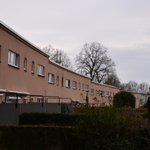
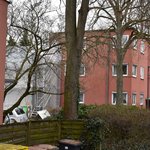
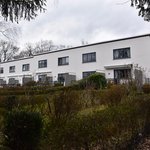
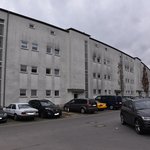
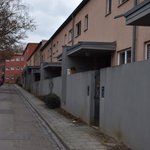
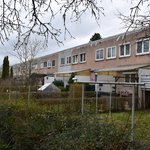
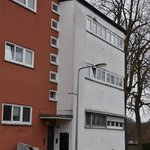
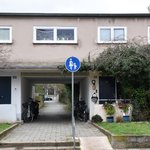
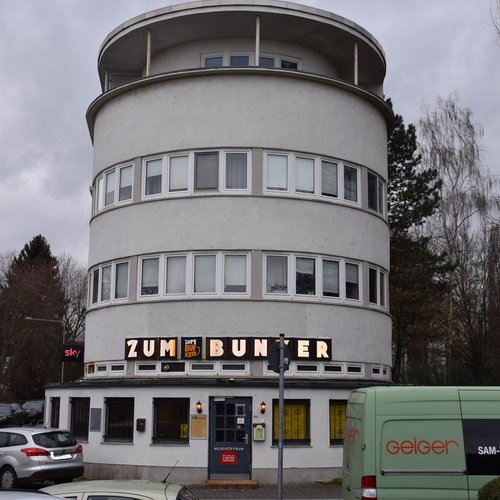
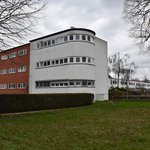
The housing itself consists predominantly of single-family in elongated rows of terraced houses, each with its own garden, emphasising light, air and access to green space as key elements of modern living. In total, 581 such houses were built, alongside 602 flats in multi-storey apartment blocks. These larger buildings were often positioned at right angles to the rows of terraced houses, creating defined spatial edges and a varied urban form. They also benefited from garden areas along the embankment. The main axis of the estate is Hadrianstraße, which runs through its centre. The buildings along this street accommodate shops and services for everyday needs.

To enable rapid and cost-effective construction, prefabrication and serial building methods were employed. Standardised components, such as concrete external walls, were produced in series and assembled on site, reflecting the rational, industrial approach of the Neues Frankfurt initiative. The design extended beyond the architecture itself: the gardens and green spaces were planned by Leberecht Migge and Max Bromme, who also specified the planting in detail and famous landscape architects, ensuring a coherent overall environment. As Ernst May later noted, Römerstadt offered its residents an environment shaped according to a clear cultural vision, from public spaces to houses, gardens and even interior furnishings.

Technologically, the estate was highly innovative for its time and is regarded as the first fully electrified housing development in Germany. The houses were equipped with combination electric cookers, which included an integrated emergency stove for briquettes, while hot water was supplied by electrically powered 80-litre low-pressure storage heaters. The apartment buildings, by contrast, were served by a central heating system fuelled by coke.

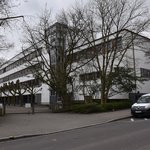
The site also includes the Geschwister Scholl School. Built and opened in 1930 as the Römerstadt School, it was designed by the architect Martin Elsaesser. After the Second World War, the building was used as workers’ accommodation until 1951, after which it returned to its original function as a school. Following several changes of name, it has borne its current name since 1964.

Description

The Römerstadt housing estate is a key example of the Neues Frankfurt programme and is notable for the way its overall layout is shaped by the surrounding landscape. The course of the River Nidda, running from the districts of Praunheim to Heddernheim, determines the site with a gentle, sweeping line. Along the river, the estate is defined by an embankment, beyond which it opens into green spaces with allotment gardens, creating a gradual transition between built form and nature.

Conceived as a classic satellite settlement, Römerstadt was planned as a largely self-contained residential area without a direct structural connection to the existing city. Essential facilities such as schools and local shops were integrated into the estate itself, forming a neighbourhood centre, while more specialised services remained in the city and were accessible by public transport. This reflects the broader urban planning principles of the time, which sought to decentralise the city while maintaining connectivity.

The housing itself consists predominantly of single-family in elongated rows of terraced houses, each with its own garden, emphasising light, air and access to green space as key elements of modern living. In total, 581 such houses were built, alongside 602 flats in multi-storey apartment blocks. These larger buildings were often positioned at right angles to the rows of terraced houses, creating defined spatial edges and a varied urban form. They also benefited from garden areas along the embankment. The main axis of the estate is Hadrianstraße, which runs through its centre. The buildings along this street accommodate shops and services for everyday needs.

To enable rapid and cost-effective construction, prefabrication and serial building methods were employed. Standardised components, such as concrete external walls, were produced in series and assembled on site, reflecting the rational, industrial approach of the Neues Frankfurt initiative. The design extended beyond the architecture itself: the gardens and green spaces were planned by Leberecht Migge and Max Bromme, who also specified the planting in detail and famous landscape architects, ensuring a coherent overall environment. As Ernst May later noted, Römerstadt offered its residents an environment shaped according to a clear cultural vision, from public spaces to houses, gardens and even interior furnishings.

Technologically, the estate was highly innovative for its time and is regarded as the first fully electrified housing development in Germany. The houses were equipped with combination electric cookers, which included an integrated emergency stove for briquettes, while hot water was supplied by electrically powered 80-litre low-pressure storage heaters. The apartment buildings, by contrast, were served by a central heating system fuelled by coke.

The site also includes the Geschwister Scholl School. Built and opened in 1930 as the Römerstadt School, it was designed by the architect Martin Elsaesser. After the Second World War, the building was used as workers’ accommodation until 1951, after which it returned to its original function as a school. Following several changes of name, it has borne its current name since 1964.
History

Built between 1927 and 1929, the Römerstadt estate formed part of the Neues Frankfurt programme, with tenants moving in between 1928 and 1929. With its moderate rents, it was intended primarily for the middle classes. To represent and coordinate residents’ interests, the Interessengemeinschaft Römerstadt (interest group) was established, following the example of the Praunheim estate. The project was financed through a mix of public funds, private capital, foreign loans, and mandatory tenant contributions, which were offset by reduced rents and secured long-term tenancy rights. As rents were also increased due to the involvement of foreign loans, the interest group was formed to protect tenants.
The site had previously been a large garden area, and the leaseholders were required to give up their plots to make way for the new development. Many of the street names refer to the ancient Roman town of Nida, which once stood here and has been the subject of archaeological excavations; the nearby River Nidda also preserves this historical reference.

The estate suffered relatively little damage during the Second World War in 1945. Nevertheless, in the aftermath, residents were forced to leave their homes. Initially, the housing was occupied by workers—likely including forced labourers during the war—and subsequently by members of the US Army. It was not until the mid-1950s that former residents were permitted to return to their flats.

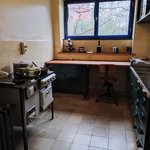
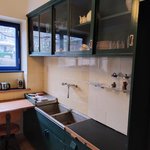
In 2010, the Ernst May House at Im Burgfeld 136 was opened to the public as a museum and exhibition space. It also features the Frankfurt Kitchen, one of the most influential designs associated with the Neues Frankfurt project.

History

Built between 1927 and 1929, the Römerstadt estate formed part of the Neues Frankfurt programme, with tenants moving in between 1928 and 1929. With its moderate rents, it was intended primarily for the middle classes. To represent and coordinate residents’ interests, the Interessengemeinschaft Römerstadt (interest group) was established, following the example of the Praunheim estate. The project was financed through a mix of public funds, private capital, foreign loans, and mandatory tenant contributions, which were offset by reduced rents and secured long-term tenancy rights. As rents were also increased due to the involvement of foreign loans, the interest group was formed to protect tenants.

The site had previously been a large garden area, and the leaseholders were required to give up their plots to make way for the new development. Many of the street names refer to the ancient Roman town of Nida, which once stood here and has been the subject of archaeological excavations; the nearby River Nidda also preserves this historical reference.

The estate suffered relatively little damage during the Second World War in 1945. Nevertheless, in the aftermath, residents were forced to leave their homes. Initially, the housing was occupied by workers—likely including forced labourers during the war—and subsequently by members of the US Army. It was not until the mid-1950s that former residents were permitted to return to their flats.

In 2010, the Ernst May House at Im Burgfeld 136 was opened to the public as a museum and exhibition space. It also features the Frankfurt Kitchen, one of the most influential designs associated with the Neues Frankfurt project.

Sources

Construction types
reinforced concrete
Facades
plaster
Windows
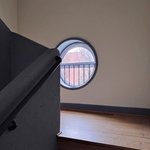
casement fixed ribbon oculus
Roof
flat
Details
balcony terrace canopy pillar
Position
along a street with/in a garden/park periphere/neighbourhood
Storeys
4

Impressions

Gallery image of Römerstadt Gallery image of Römerstadt Gallery image of Römerstadt Gallery image of Römerstadt Gallery image of Römerstadt Gallery image of Römerstadt Gallery image of Römerstadt Gallery image of Römerstadt Gallery image of Römerstadt Gallery image of Römerstadt Gallery image of Römerstadt Gallery image of Römerstadt Gallery image of Römerstadt Gallery image of Römerstadt Gallery image of Römerstadt Gallery image of Römerstadt Gallery image of Römerstadt Gallery image of Römerstadt Gallery image of Römerstadt Gallery image of Römerstadt Gallery image of Römerstadt Gallery image of Römerstadt Gallery image of Römerstadt Gallery image of Römerstadt Gallery image of Römerstadt Gallery image of Römerstadt Gallery image of Römerstadt Gallery image of Römerstadt Gallery image of Römerstadt Gallery image of Römerstadt Gallery image of Römerstadt Gallery image of Römerstadt Gallery image of Römerstadt Gallery image of Römerstadt Gallery image of Römerstadt Gallery image of Römerstadt Gallery image of Römerstadt Gallery image of Römerstadt Gallery image of Römerstadt Gallery image of Römerstadt Gallery image of Römerstadt Gallery image of Römerstadt