Sept. 24, 1902
March 27, 1998
Trained in Vienna under Josef Hoffmann, Ulrich returned to Zagreb at the end of the 1920s as one of the earliest advocates of modern architecture in Croatia. His work of the 1930s represents the core and high point of his contribution. Ulrich’s 1930s buildings introduced a clear, functionalist vocabulary—purified volumes, minimalist façades, and precise detailing—into Zagreb’s urban fabric.
His projects during the 1930s defined Ulrich as one of the principal shapers of Zagreb’s modernist cityscape.
From 1942 to 1945 he ran a design office with Vladimir Juranović. His postwar work was extensive but less innovative; he remained professionally active until the 1960s and received major national awards.
Sources
Buildings
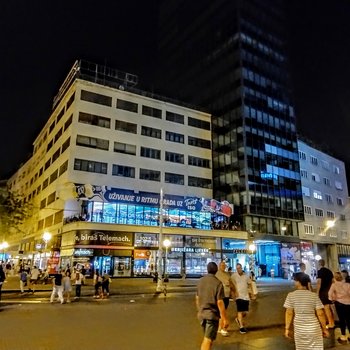
Zagreb, Croatia
Foundation Block