Schuberthof (1928)

Feed image of Schuberthof

#Apartment block #Augsburg #Germany #1928

Architects

Thomas Wechs

Developers

Wohnungsbaugesellschaft der Stadt Augsburg GmbH (WBG)

Address and directions

Johannes-Rösle-Str. 1, 3, 5, 7, 9, 11, 13, 15, 17, 19, 21, 23, 25; Rosenaustr. 52, 54, 56, 58, 60, 62, 64, 66, 68; Schlettererstraße 1, 3, 5, 7, 9, 11, 13
86152 Augsburg, Germany

Public transport: Rosenaustraße

Access: Accessible

Today's use: Apartment block

One of the first modern residential courtyard complexes in Bavaria

Description

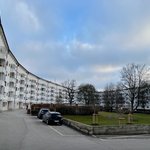
The Schuberthof is a large residential complex in Augsburg, Germany, designed by architect Thomas Wechs and built between 1928 and 1930. It is composed of 28 separate buildings with a total of 186 apartments, including 52 large flats, 104 medium-sized flats, and 28 small flats. In addition to residential units, the complex includes two retail spaces and offices for the local housing association.

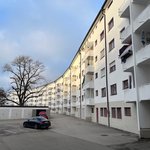
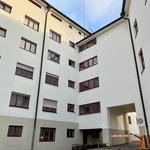
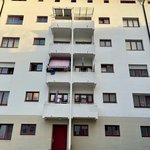
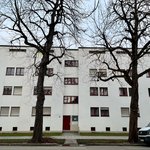
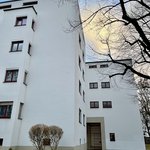
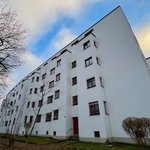
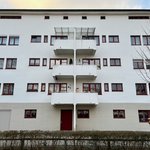
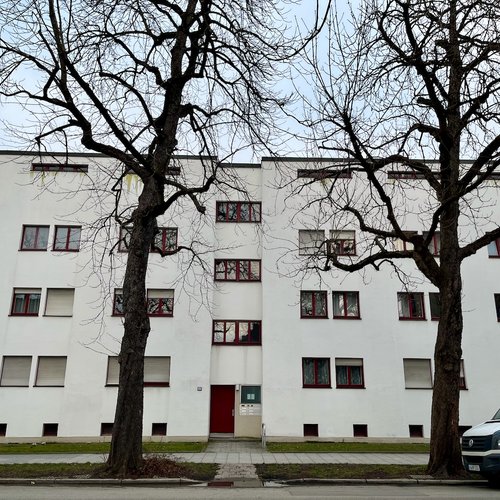
All apartments were originally designed with both a bathroom and a kitchen, larger units featured central hot water heating, while smaller ones had stove heating. The buildings are arranged into four structural blocks with white plaster façades, red window frames, flat roofs, and clear modernist lines.

A one-story retail wing with a glass front marks the entrance at the south side, while the arrangement of houses on the north side creates a second access to the interior courtyard. The large inner courtyard is shielded from street view and was designed for residents’ use, with a playground, a lawn for bleaching and drying laundry, and a water basin, emphasizing functionality and community space.

Description

The Schuberthof is a large residential complex in Augsburg, Germany, designed by architect Thomas Wechs and built between 1928 and 1930. It is composed of 28 separate buildings with a total of 186 apartments, including 52 large flats, 104 medium-sized flats, and 28 small flats. In addition to residential units, the complex includes two retail spaces and offices for the local housing association.

All apartments were originally designed with both a bathroom and a kitchen, larger units featured central hot water heating, while smaller ones had stove heating. The buildings are arranged into four structural blocks with white plaster façades, red window frames, flat roofs, and clear modernist lines.

A one-story retail wing with a glass front marks the entrance at the south side, while the arrangement of houses on the north side creates a second access to the interior courtyard. The large inner courtyard is shielded from street view and was designed for residents’ use, with a playground, a lawn for bleaching and drying laundry, and a water basin, emphasizing functionality and community space.

History

The project was commissioned by the Wohnungsbaugesellschaft der Stadt Augsburg GmbH (WBG) as the housing company’s first major development. Construction began in September 1928, and by summer 1930 the complex was completed and ready for occupancy. The site was on land the city had acquired in 1911 from the Schnupftabak (snuff tobacco) factory Lotzbeck.

City building official Otto Holzer invited Thomas Wechs in January 1928 to plan the project for the newly established municipal housing association. Wechs had already prepared early sketches for the site, known as the Lotzbeck Meadow, by February 1928, and received the contract in March. He was given broad design freedom, with the only requirement being to build as many apartments as possible at monthly rents between 24 and 42 Reichsmarks, making the housing affordable for the middle class.

After World War II, bomb damage to the complex was repaired. The Schuberthof was officially placed under monument protection in 1977, and an exterior restoration in keeping with its historic character took place in summer 1987.

History

The project was commissioned by the Wohnungsbaugesellschaft der Stadt Augsburg GmbH (WBG) as the housing company’s first major development. Construction began in September 1928, and by summer 1930 the complex was completed and ready for occupancy. The site was on land the city had acquired in 1911 from the Schnupftabak (snuff tobacco) factory Lotzbeck.

City building official Otto Holzer invited Thomas Wechs in January 1928 to plan the project for the newly established municipal housing association. Wechs had already prepared early sketches for the site, known as the Lotzbeck Meadow, by February 1928, and received the contract in March. He was given broad design freedom, with the only requirement being to build as many apartments as possible at monthly rents between 24 and 42 Reichsmarks, making the housing affordable for the middle class.

After World War II, bomb damage to the complex was repaired. The Schuberthof was officially placed under monument protection in 1977, and an exterior restoration in keeping with its historic character took place in summer 1987.

Sources

Construction types
concrete skeleton
Facades
plaster
Windows
casement
Roof
flat
Details
balcony oriel pillar passage
Position
along a street periphere/neighbourhood
Storeys
5

Impressions

Gallery image of Schuberthof Gallery image of Schuberthof Gallery image of Schuberthof Gallery image of Schuberthof Gallery image of Schuberthof Gallery image of Schuberthof Gallery image of Schuberthof Gallery image of Schuberthof Gallery image of Schuberthof Gallery image of Schuberthof Gallery image of Schuberthof Gallery image of Schuberthof Gallery image of Schuberthof Gallery image of Schuberthof Gallery image of Schuberthof Gallery image of Schuberthof