Peter Jones (1932)

Feed image of Peter Jones

#Department store #London #United Kingdom #1932

Architects

William Crabtree

Developers

Peter Jones & Partners

Address and directions

Sloane Square SW1
SW1W 8EL London, United Kingdom

Public transport: Sloane Square

Access: Public building, free entry during working hours

Today's use: Shops

Description

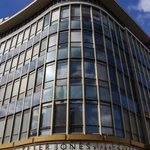
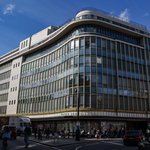
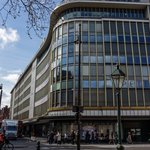
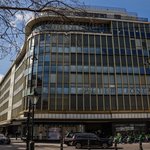
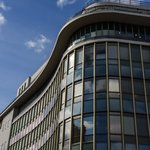
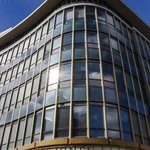
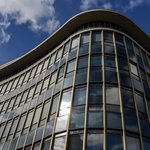
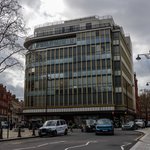
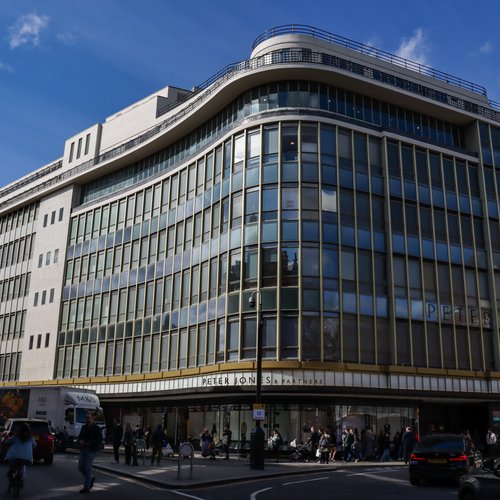
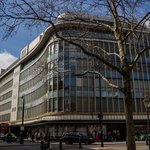
The building stands out chiefly because it is set among houses dating from the second half of the nineteenth century. The gently curved façade at the corner of Sloane Square and King’s Road is formed from a combination of concrete and steel framing, which allows the curve to be articulated with ease. Its visual impact is further enhanced by the slight set-back of the penultimate storey, creating space for a terrace.

The tower on King’s Road forms a distinct termination to the building, a feature that can be clearly appreciated from Symons Street, where the end of the structure is particularly legible.

The concept of the building glowing from within at night is made possible by its many large windows. This effect is further reinforced by illuminated signage, a light band above the canopy, and a contemporary lighting system that varies its appearance according to the weather conditions with the so called Lorenz system.
Description

The building stands out chiefly because it is set among houses dating from the second half of the nineteenth century. The gently curved façade at the corner of Sloane Square and King’s Road is formed from a combination of concrete and steel framing, which allows the curve to be articulated with ease. Its visual impact is further enhanced by the slight set-back of the penultimate storey, creating space for a terrace.

The tower on King’s Road forms a distinct termination to the building, a feature that can be clearly appreciated from Symons Street, where the end of the structure is particularly legible.

The concept of the building glowing from within at night is made possible by its many large windows. This effect is further reinforced by illuminated signage, a light band above the canopy, and a contemporary lighting system that varies its appearance according to the weather conditions with the so called Lorenz system.
History

The detailed records of the building are incomplete, but the key facts can be established: it was designed between 1932 and 1936, replacing the company’s previous premises as it sought a more modern way to present its goods. The building is listed, as it featured Britain’s first modern glass curtain wall façade.

The extension beyond the tower along King’s Road and Cadogan Gardens was completed in 1963. It follows the original design, but can be distinguished by the slightly more muted tone of the façade. Around 1970 it became a listed building.

The most recent comprehensive renovation took place in 2004.

History

The detailed records of the building are incomplete, but the key facts can be established: it was designed between 1932 and 1936, replacing the company’s previous premises as it sought a more modern way to present its goods. The building is listed, as it featured Britain’s first modern glass curtain wall façade.

The extension beyond the tower along King’s Road and Cadogan Gardens was completed in 1963. It follows the original design, but can be distinguished by the slightly more muted tone of the façade. Around 1970 it became a listed building.

The most recent comprehensive renovation took place in 2004.

Sources

Construction types
steel skeleton concrete skeleton
Facades
plaster curtain wall glass
Windows
casement fixed ribbon
Roof
flat curved
Details
railing terrace roof terrace canopy lettering
Position
along a street periphere/neighbourhood
Storeys
7

Impressions

Gallery image of Peter Jones Gallery image of Peter Jones Gallery image of Peter Jones Gallery image of Peter Jones Gallery image of Peter Jones Gallery image of Peter Jones Gallery image of Peter Jones Gallery image of Peter Jones Gallery image of Peter Jones Gallery image of Peter Jones