Bornheimer Hang (1926)

Feed image of Bornheimer Hang

#Housing estate #Frankfurt (Main) #Germany #1926

Architects

Ernst May, Herbert Boehm

Developers

Aktienbaugesellschaft für kleine Wohnungen (ABG)

Address and directions

Florstädter Straße; Inheider Straße 1-32, 34, 36, 38, 40, 42, 44; Karl-Albert-Straße; Karl-Flesch-Straße; Kettelerallee; Ortenburger Straße 1, 3, 5, 7, 9-11, 13, 15, 17, 19, 21, 23, 25, 27, 29, 31, 33, 35, 37, 39, 41-58; Pestalozzistraße; Saalburgallee 21, 23, 25, 27 29, 31, 33, 35, 37; Wittelsbacher Allee 142, 144, 146, 148, 150, 152, 154, 156-168, 170-188, 190, 195, 197, 199, 201, 205
60385 Frankfurt (Main), Germany

Public transport: Ernst-May-Platz

Access: Public building, free entry during working hours

Today's use: Apartments, shops, sacral
Topography Shaped the Bornheimer Hang

Description

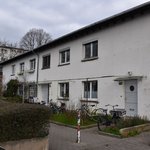
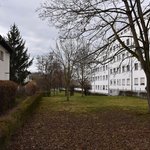
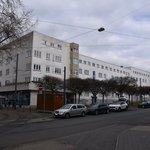
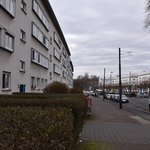
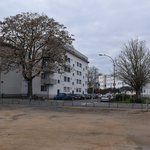
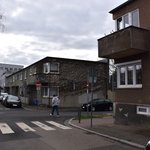
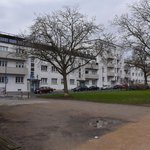
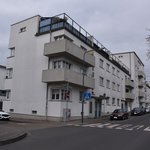
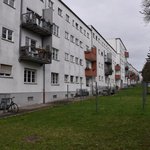
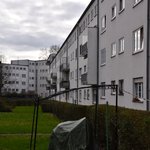
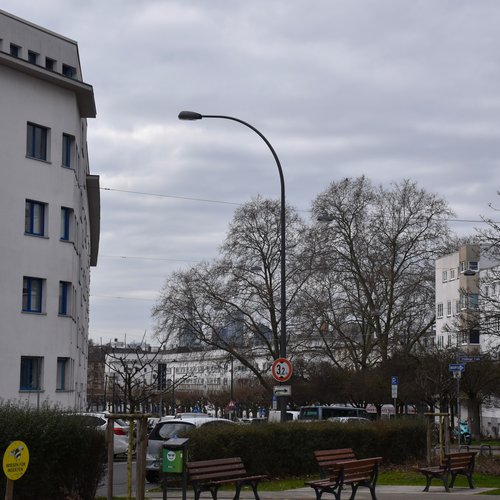
This housing estate is strongly shaped by the topography. To the east, there is a slope into which the residents’ allotment gardens have been laid out. In contrast to other estates planned by Ernst May, this development connects directly to the pre-existing buildings. To create a more harmonious transition, pitched roofs were added.

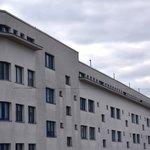
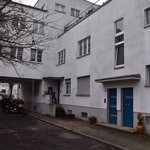
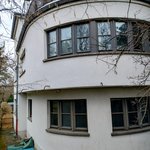
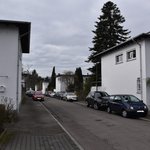
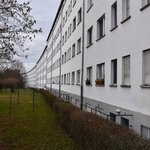
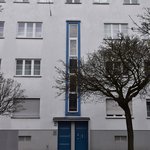
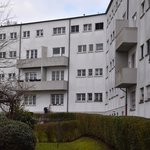
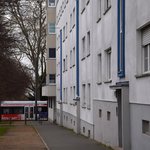
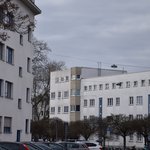
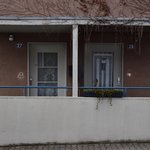
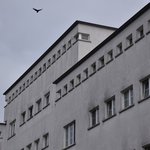
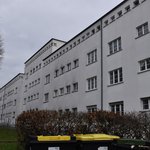
However, the houses from the first phase of construction can still be clearly identified by their stairway windows, which taper to a point. Only further away does the development give way to the more typical flat roofs. Unlike many other estates of the Neues Frankfurt movement, this is not a satellite settlement linked to the rest of the city purely through infrastructure, but rather forms a continuous urban fabric. A mix of housing types can be found here, including both apartment blocks and single-family houses in two groups surrounded by apartment blocks. The latter are arranged in rows and have two storeys. All flats are between 55 and 65 square metres.

It is particularly noteworthy that, in order to speed up construction between 1926 and 1930, some components were prefabricated, an early form of standardisation. Given that numerous estates were being built simultaneously in Frankfurt am Main, this approach was entirely logical. In total, 1,234 dwellings were constructed between 1926 and 1930. The street Wittelsbacherallee is located in the centre of the housing estate.

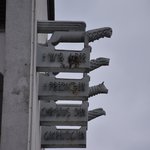
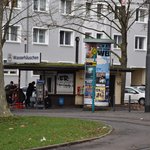
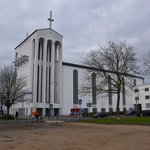
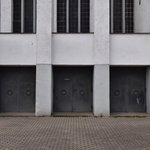
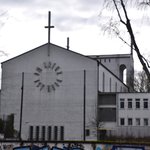
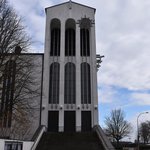
The estate also includes the Holy Cross Church by Martin Weber. Anyone alighting at the tram terminus Ernst-May-Platz will notice, at the end of Wittelsbacher Straße, the steps leading up to the church entrance. This laid out almost like a carefully designed processional route. The church itself consists of a steel frame structure with a shallow gabled roof. On the exterior of the tower are the symbols of the Four Evangelists, the angel, lion, ox and eagle, beneath which is the inscription: “But we preach Christ crucified.”

Owing to the topography, the estate can be perceived particularly clearly from the east, where the height of the church makes it especially prominent.

Description

This housing estate is strongly shaped by the topography. To the east, there is a slope into which the residents’ allotment gardens have been laid out. In contrast to other estates planned by Ernst May, this development connects directly to the pre-existing buildings. To create a more harmonious transition, pitched roofs were added.

However, the houses from the first phase of construction can still be clearly identified by their stairway windows, which taper to a point. Only further away does the development give way to the more typical flat roofs. Unlike many other estates of the Neues Frankfurt movement, this is not a satellite settlement linked to the rest of the city purely through infrastructure, but rather forms a continuous urban fabric. A mix of housing types can be found here, including both apartment blocks and single-family houses in two groups surrounded by apartment blocks. The latter are arranged in rows and have two storeys. All flats are between 55 and 65 square metres.

It is particularly noteworthy that, in order to speed up construction between 1926 and 1930, some components were prefabricated, an early form of standardisation. Given that numerous estates were being built simultaneously in Frankfurt am Main, this approach was entirely logical. In total, 1,234 dwellings were constructed between 1926 and 1930. The street Wittelsbacherallee is located in the centre of the housing estate.

The estate also includes the Holy Cross Church by Martin Weber. Anyone alighting at the tram terminus Ernst-May-Platz will notice, at the end of Wittelsbacher Straße, the steps leading up to the church entrance. This laid out almost like a carefully designed processional route. The church itself consists of a steel frame structure with a shallow gabled roof. On the exterior of the tower are the symbols of the Four Evangelists, the angel, lion, ox and eagle, beneath which is the inscription: “But we preach Christ crucified.”

Owing to the topography, the estate can be perceived particularly clearly from the east, where the height of the church makes it especially prominent.

History

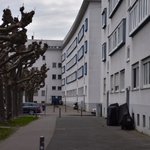
Ernst May served as the city’s Director of Planning from 1925 to 1930. Unlike his other housing estates, which were conceived as satellite developments, he integrated this one into the existing urban fabric. This approach was atypical of his work but reflected the requirements of the municipal building regulations. It can be seen, for example, in the pitched roofs in the western section, such as along Pestalozzistraße. These areas were developed in 1926 and 1927. Construction paused in 1928. The remaining sections, with flat roofs, as well as the church, were built in 1929 and 1930.

Some of the damage sustained during the Second World War was remedied through complete reconstruction. Since 1995, the central square at the tram terminus has borne the name Ernst May.
History

Ernst May served as the city’s Director of Planning from 1925 to 1930. Unlike his other housing estates, which were conceived as satellite developments, he integrated this one into the existing urban fabric. This approach was atypical of his work but reflected the requirements of the municipal building regulations. It can be seen, for example, in the pitched roofs in the western section, such as along Pestalozzistraße. These areas were developed in 1926 and 1927. Construction paused in 1928. The remaining sections, with flat roofs, as well as the church, were built in 1929 and 1930.
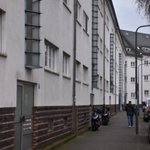
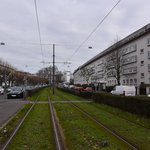
Some of the damage sustained during the Second World War was remedied through complete reconstruction. Since 1995, the central square at the tram terminus has borne the name Ernst May.

Sources

Construction types
reinforced concrete
Facades
plaster
Windows
casement fixed ribbon
Roof
flat gable
Details
balcony roof terrace
Position
along a street periphere/neighbourhood
Storeys
5

Impressions

Gallery image of Bornheimer Hang Gallery image of Bornheimer Hang Gallery image of Bornheimer Hang Gallery image of Bornheimer Hang Gallery image of Bornheimer Hang Gallery image of Bornheimer Hang Gallery image of Bornheimer Hang Gallery image of Bornheimer Hang Gallery image of Bornheimer Hang Gallery image of Bornheimer Hang Gallery image of Bornheimer Hang Gallery image of Bornheimer Hang Gallery image of Bornheimer Hang Gallery image of Bornheimer Hang Gallery image of Bornheimer Hang Gallery image of Bornheimer Hang Gallery image of Bornheimer Hang Gallery image of Bornheimer Hang Gallery image of Bornheimer Hang Gallery image of Bornheimer Hang Gallery image of Bornheimer Hang Gallery image of Bornheimer Hang Gallery image of Bornheimer Hang Gallery image of Bornheimer Hang Gallery image of Bornheimer Hang Gallery image of Bornheimer Hang Gallery image of Bornheimer Hang Gallery image of Bornheimer Hang Gallery image of Bornheimer Hang Gallery image of Bornheimer Hang Gallery image of Bornheimer Hang Gallery image of Bornheimer Hang Gallery image of Bornheimer Hang Gallery image of Bornheimer Hang Gallery image of Bornheimer Hang Gallery image of Bornheimer Hang Gallery image of Bornheimer Hang Gallery image of Bornheimer Hang Gallery image of Bornheimer Hang Gallery image of Bornheimer Hang