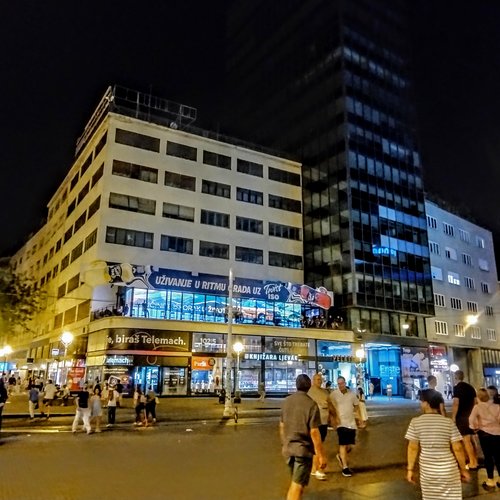
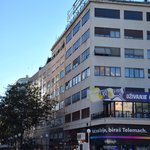
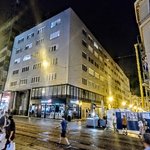
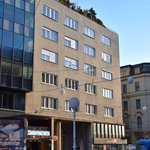
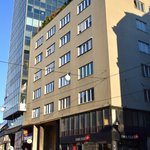
Since the early 19th century, the site on Zagreb’s main square was occupied by the Foundation Hospital (Zakladna bolnica). The hospital itself originated as a zakladnica—a charitable foundation established by the Bishop of Zagreb in the early 19th century. When the hospital was demolished in early 1931. The traditional designation zakladnica was transferred to the new urban complex planned for the site, giving rise to the name “Foundation block.” After the grounds were cleared, the city celebrated the moment publicly, and the land was subsequently subdivided and sold for redevelopment. A planning competition held in 1929/30 had already defined the parcel structure and architectural guidelines for this new block.
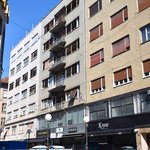
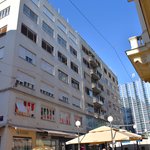
Throughout the 1930s, a series of modern residential and commercial buildings rose on the former hospital grounds, designed by many of Zagreb’s leading architects:
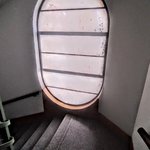
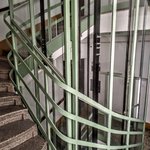
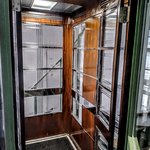
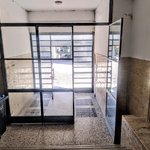
Bogovićeva 2 / Gajeva 2C – Hahn House (1932–1933), likely developed by a man named Hahn, designed by Otto Goldscheider. Bogovićeva 4 – Levin Schlenger Residential–Commercial Building (1932–1933), designed by Slavko Löwy for Levin Schlenger. Bogovićeva 6 / Petrićeva 7 – Günsberg Residential–Commercial Building (1932–1933), also by Slavko Löwy, built for Maks and Jelisava Günsberg. Together with No. 4, these were the earliest structures completed as a part of the Foundation block. Gajeva 2 / Trg bana Jelačića – Pension Fund Building of the City Savings Bank (1934), designed by Hugo Ehrlich.Gajeva 2A – Banovina Savings Bank Building (1935–1936) by Stanko Kliska with Antun Ulrich. Gajeva 2B – Alkalay Residential–Commercial Building (1932–1933), designed by Freudenreich & Deutsch for the Alkalay family. Ilica 1A / Petrićeva 1 – International Style Building with the Chapel of the Wounded Jesus (kapelica Ranjenog Isusa ) (1932–1933), designed by Franjo Bahovec and Antun Ulrich. Petrićeva 3 – Central Livestock Insurance Cooperative Building (Središnja zadruga za osiguranje stoke) (1936), designed by Franjo Gabrić. Petrićeva 5 – Šepetanc House (1936–1937), designed by Stjepan Planić for theŠepetanc family.
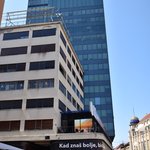
Despite this rapid transformation, a noticeable gap remained between Ilica 1A and Gajeva 2. For years, the empty space held only a single-storey structure used as a shoe shop. It was not until 1958 that the site was fully consolidated with the construction of Zagreb’s first high-rise, the “Ilički neboder.” Significantly taller than the surrounding buildings, the tower soon became a defining landmark in the silhouette of Zagreb's main square Trg bana Josipa Jelačića.
Today, the entire ensemble of buildings erected between 1932 and 1937 is protected as a cultural heritage zone, preserving one of Zagreb’s most coherent examples of early modern urban architecture.